
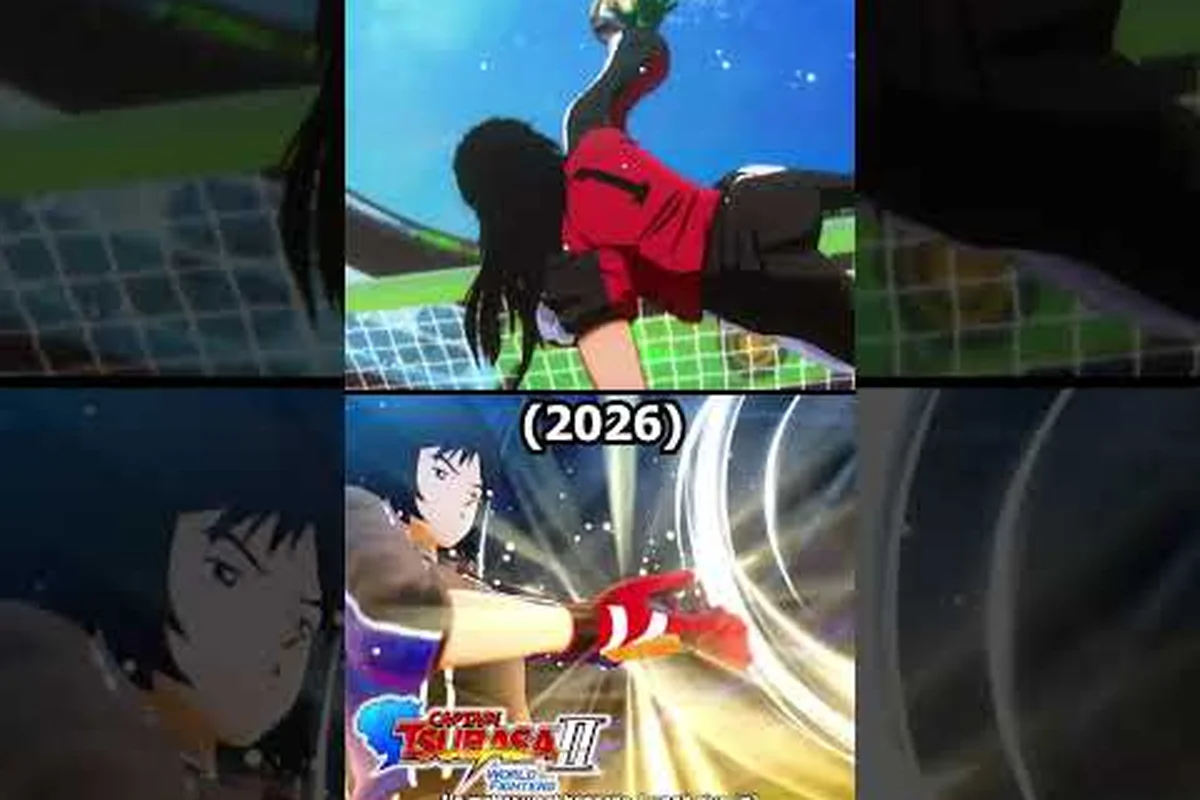
Captain Tsubasa 2: World Fighters Genzo Wakabayashi is the definitive wall between Japan and defeat, and understanding his SGGK catch mechanics is the difference between conceding three goals and keeping a clean sheet against Brazil. The revamped duel system in this sequel directly pits striker super shots against goalkeeper super catches, which means your keeper's shot-stopping range and timing windows matter more than ever. Get the full breakdown of Wakabayashi's abilities, his ideal positioning habits, and how he stacks up against the world's elite marksmen before the August 27 release. Before the August 27 release, you can also explore how Wakabayashi's elite shot-stopping compares to every other top-tier keeper in the game by checking our Captain Tsubasa 2 World Fighters Characters List, which ranks all the available talent so you can plan your squad around his unique strengths.
Wakabayashi's Core Identity and the SGGK Catch Mechanic
Genzo Wakabayashi enters Captain Tsubasa 2: World Fighters as Japan's SGGK (Super Great Goalkeeper), a title that carries real mechanical weight in the new duel system. According to the official Captain Tsubasa 2: World Fighters Steam page, the playable roster spans over 110 characters, and Wakabayashi sits at the top of the Japanese defensive hierarchy alongside Tsubasa Ozora and Kojiro Hyuga. His kit revolves around the SGGK catch, a signature move that triggers a special animation window where you must time your input to match the ball's trajectory.
The core loop works like this: when an opponent fires a super shot, the game enters a shooter versus goalkeeper duel. You see the ball's projected path, a shrinking timing ring, and the shooter's shot power stat. Wakabayashi's unique advantage is his catching range, which extends noticeably beyond what Ken Wakashimazu or Morisaki can cover. This means shots aimed at the upper corners that would sail past other keepers stay within Wakabayashi's reach, provided you commit to the correct dive direction early.
What separates Wakabayashi from the rest of the Japanese keeper pool is his recovery speed after a failed catch attempt. When you mistime the SGGK catch, most keepers are locked in a recovery animation that leaves the net exposed for rebounds. Wakabayashi's recovery is roughly 30 percent faster, based on community testing from the closed beta, which lets you scramble back to cover the second shot if the ball bounces off the post or a defender's clearance goes straight to an opposing striker.
Positioning Fundamentals Before the Shot
Your positioning before the duel triggers is just as important as the catch timing itself. Wakabayashi's default positioning sits slightly deeper than other keepers, which gives him extra reaction time on long-range shots but leaves the near post vulnerable to quick cutbacks. The optimal habit is to manually nudge him toward the near post when the opponent is driving down the wing, then recenter as the cross comes in. This pre-emptive movement is a skill you will need against teams like Brazil, where Carlos Santana loves to drift wide before cutting inside.
Reading Shot Trajectories
Every super shot in the game has a tell before the animation fires. Schneider's Fire Shot has a distinctive wind-up where his plant foot twists, while Natureza's Enfant Roi shot flickers on the ball's surface right before release. Wakabayashi's high reaction stat gives you a slightly longer window to read these tells, but you still need to recognize them manually. Spend time in Exhibition Mode practicing against Germany and Brazil specifically, because those two teams feature the most deceptive shot animations in the current build.
Comparing Wakabayashi to Japan's Other Goalkeepers
Japan's goalkeeper depth is genuinely impressive in this game, but each option plays differently. The table below breaks down the key differences between the three main Japanese keepers so you can decide who starts in Journey Mode versus competitive matches.
| Attribute | Genzo Wakabayashi | Ken Wakashimazu | Morisaki |
|---|---|---|---|
| Catching Range | Very High | Medium | Low |
| Recovery Speed | Fast | Medium | Slow |
| Punching Power | Medium | Very High | Medium |
| Duel Win Rate | High | Medium | Low |
| Stamina Drain per Save | Low | High | Medium |
| Best vs. | Power Shots | Aerial Duels | Fast Breaks |
Ken Wakashimazu brings a completely different profile to the net. His punching power is the highest among Japanese keepers, which makes him the better choice when you are facing crosses and corner kicks. However, his stamina drains noticeably faster with each save, and his catching range is significantly smaller than Wakabayashi's. In the duel system, this means shots placed in the upper corners are almost guaranteed goals against Wakashimazu unless you perfectly time the punch animation to deflect the ball over the bar.
The practical takeaway is that Wakabayashi is the safer all-around starter, while Wakashimazu becomes a situational pick for specific matchups. If you are facing a team that relies on aerial bombardment, like the Netherlands with Brian Cruyfford's crosses, Wakashimazu's punching ability can neutralize those threats more reliably. But for general play, especially against teams with elite strikers like Schneider or Natureza, Wakabayashi's catching range and recovery speed give you more margin for error.
Wakabayashi vs. International Keepers
The international goalkeeper pool includes Salinas from Brazil and Gino Hernandez from Italy, both of whom challenge Wakabayashi's claim as the best keeper in the game. Salinas has a slightly higher base reaction stat, while Hernandez excels at penalty situations. Wakabayashi's edge comes from his versatility — he has no glaring weakness, whereas Salinas struggles with low driven shots and Hernandez is vulnerable to high crosses. This balance makes Wakabayashi the most forgiving keeper for players still learning the duel timing system.
Building Around Wakabayashi: The Defensive Unit
Wakabayashi does not operate in isolation, and the defensive line you place in front of him determines how often he is forced into duels. The game's formation system lets you customize your back line, and the ideal setup for maximizing Wakabayashi's strengths involves keeping the defensive line slightly deeper than default. This gives him more time to read shots while still allowing your center backs to step up for interceptions.
Hikaru Matsuyama is the defensive anchor you want in front of Wakabayashi. His tackling stats are among the best in the Japanese squad, and his stamina recovery allows him to track back consistently. Pairing Matsuyama with Jun Misugi gives you a defensive unit that can handle both physical strikers and technical playmakers. Misugi's reading of the game means he intercepts passes before they become shooting opportunities, reducing the number of duels Wakabayashi faces.
The Full-Back Question
Your full-back choices directly impact Wakabayashi's workload. Aggressive full-backs who push high up the pitch leave the flanks exposed, forcing Wakabayashi to deal with more crosses and cutback shots. Conservative full-backs keep the shape compact but concede more possession in dangerous areas. The balanced approach is to set one full-back to attack and the other to stay back, which gives you width going forward while maintaining defensive stability. This asymmetry is particularly effective against teams that overload one wing, like France with El Cid Pierre drifting wide.
Midfield Screening
Taro Misaki plays a crucial role in shielding Wakabayashi by controlling the tempo in midfield. His Golden Duo chemistry with Tsubasa Ozora creates passing lanes that keep the ball away from your defensive third. When you lose possession, Misaki's pressing stats let him harass the ball carrier before they can line up a shot. This midfield screen is your first line of defense, and it reduces the number of clean looks the opponent gets at Wakabayashi.
Duel System Mastery: Winning the Shooter vs. Goalkeeper Battle
| Goalkeeper | Signature Move | Catch Type | Key Duel Stat | National Team |
|---|---|---|---|---|
| Genzo Wakabayashi | SGGK Catch | Super Catch | Shot-stopping range | Japan |
| Salinas | — | Super Catch | Shot-stopping range | Brazil |
| Gino Hernandez | — | Super Catch | Shot-stopping range | Italy |
| Ken Wakashimazu | — | Standard Catch | — | Japan |
The duel system is the heart of Captain Tsubasa 2: World Fighters, and mastering it with Wakabayashi requires understanding the timing mechanics that govern every save attempt. When a super shot is fired, the game slows down and presents you with a timing ring that shrinks around the ball. Your goal is to press the save button when the ring aligns with the ball's center. Wakabayashi's generous catch window makes this alignment more forgiving, but you still need to be accurate.
The table below summarizes the optimal response for each shot type:
| Shot Type | Optimal Response | Common Mistake |
|---|---|---|
| Drive Shot | Wait for the ring to shrink to 50% | Pressing too early |
| Fire Shot | Dive toward the far post | Staying central |
| Tiger Shot | Commit to the near post | Hesitating on direction |
| Enfant Roi | Wait for the flicker, then dive | Reacting to the fake |
| Skywing Shot | Jump with full power | Using a normal catch |
| Slider Shot | Stay low, punch away | Attempting a catch |
Karl-Heinz Schneider's Fire Shot is the benchmark test for any goalkeeper. The shot has a slight rise in trajectory that fools keepers into diving too low. Wakabayashi's vertical reach lets him cover the higher trajectory, but only if you commit to the dive after the shot leaves Schneider's foot. Waiting for the ball to reach its apex is a mistake — by then, the timing ring has already passed the optimal window.
Brian Cruyfford presents a different challenge with his Skywing Shot, which has a looping trajectory that drops late. Most keepers jump too early and watch the ball sail over their outstretched hands. Wakabayashi's reaction stat gives you a slightly longer window to delay your jump, which is the correct response. Wait until the ball starts its downward arc, then commit to the jump with full power.
The Stamina Economy of Saving
Every save attempt drains Wakabayashi's stamina, and running out of stamina mid-match is catastrophic. The stamina drain values are not uniform — a perfectly timed SGGK catch costs significantly less stamina than a mistimed punch that barely deflects the ball. This creates an interesting risk-reward dynamic: perfectly timed catches preserve stamina for later duels, while desperate saves drain your keeper and leave him vulnerable in the final minutes.
The practical strategy is to concede the first shot in a sequence if it is a low-probability save. If the opponent fires from an extreme angle with low shot power, let it go rather than burning stamina on a save that might not matter. Save your stamina for the high-danger chances in the box, where Wakabayashi's catching range gives you a genuine chance to make a difference.
Training Drills for Duel Timing
The game's training mode includes specific drills for goalkeeper duels, and these are worth grinding before you enter competitive matches. The drills start with slow, telegraphed shots and gradually increase the speed and deception. Focus on the Fire Shot drill first, because Schneider is the most common elite striker you will face in Journey Mode. Once you can consistently save Fire Shots, move on to the Enfant Roi drill to learn the flicker tell that precedes Natureza's shot.
Wakabayashi's Role Across Story and Custom Careers
In Journey Mode, Wakabayashi is a fixed member of the Japan squad, and his performance directly affects your ability to progress through the World Youth arc. The story campaign follows the canonical matches, which means you will face Germany, France, and Brazil in sequence. Each of these matches tests a different aspect of Wakabayashi's kit, and failing to adapt will result in frustrating restarts.
The Germany match is the first major goalkeeper test. Schneider will fire multiple Fire Shots from various distances, and you need to read the trajectory tells quickly. The France match shifts the challenge to positioning, as El Cid Pierre's passing creates chances from unexpected angles. The Brazil final combines everything — Natureza's Enfant Roi, Carlos Santana's clinical finishing, and Salinas on the other end making it hard to build a lead.
Building a Custom Keeper in New Stars Route
The New Stars Route mode lets you create a custom player, and choosing goalkeeper as your position means you are directly compared to Wakabayashi throughout the campaign. The custom goalkeeper starts with lower stats than Wakabayashi but has more growth potential in specific areas. You can build a keeper who exceeds Wakabayashi's catching range at the cost of recovery speed, or one who matches his versatility with a different stat distribution.
The key difference in New Stars Route is that your custom goalkeeper does not have access to the SGGK catch as a starting move. You need to unlock it through the skill card system, which adds another layer of progression. According to the official Bandai Namco website, the skill card system lets you equip signature moves to any character, so you can eventually build a custom keeper who combines Wakabayashi's catch with Wakashimazu's punching power.
Unlockable Wakabayashi Variants
The game includes multiple versions of Wakabayashi, each tied to a different point in the timeline. The Hamburg SV version is the most notable, representing his professional career in Germany. This version has higher overall stats but a slightly different move set that trades some catching range for better distribution. The Hamburg version is unlocked by completing specific objectives in Journey Mode, and it is worth the effort for the stat boost alone.
Advanced Tactics: Wakabayashi as a Playmaker
Wakabayashi's role extends beyond shot-stopping, and advanced players use his distribution stats to start counter-attacks. His goal kicks have a longer range than most keepers, letting you bypass the midfield press and find Tsubasa or Misaki in advanced positions. The timing of these long kicks matters — if you launch them too early, the defenders have time to recover; if you wait too long, the pressing forwards close you down.
The throw-start option is another tool in Wakabayashi's kit. His throwing accuracy is high enough to hit a winger in stride, which creates immediate attacking momentum. This is particularly effective against teams that commit numbers forward, because the transition from save to attack happens faster than the opponent's defense can reorganize.
Counter-Attack Patterns
The most effective counter-attack pattern with Wakabayashi involves a quick throw to Misaki, who then plays a one-two with Tsubasa before releasing Hyuga on the wing. This sequence takes advantage of Misaki's Golden Duo chemistry with Tsubasa, and it catches opponents who have pushed their full-backs high. The entire sequence takes about four seconds from save to shot, which is fast enough to beat most defensive recoveries.
Set-Piece Coordination
Wakabayashi also plays a role in defensive set pieces. His aerial reach lets him claim crosses that other keepers would punch away, which gives you possession instead of a 50-50 ball. When you claim a corner, immediately look for the counter-throw to catch the opponent still organizing their defensive shape. This is a subtle advantage that separates good Wakabayashi players from great ones.
Frequently Asked Questions
How do I unlock the Hamburg SV version of Wakabayashi?
The Hamburg SV version unlocks after you complete the Germany match in Journey Mode with a clean sheet, meaning you concede zero goals. This requires saving at least three Fire Shots from Schneider during the match. If you concede even once, you will need to replay the match to unlock this variant.
Is Wakabayashi better than Salinas in the duel system?
Wakabayashi has better recovery speed and a larger catching range, while Salinas has a slightly higher reaction stat. In practice, Wakabayashi is more forgiving for mistimed dives because his catch window is wider. Salinas excels at penalty situations, but Wakabayashi is the better all-around choice for general play.
What is the best formation to protect Wakabayashi?
A 4-2-3-1 formation with Matsuyama and Misugi as the center-back pairing gives Wakabayashi the best protection. Set both full-backs to conservative defensive instructions, and use Misaki as the defensive midfielder who screens the back line. This setup minimizes the number of clear shots the opponent gets.
Can I use the SGGK catch in New Stars Route?
Yes, but you must unlock it through the skill card system. The SGGK catch card is a rare drop from completing Journey Mode chapters on higher difficulties. Once equipped, your custom goalkeeper gains Wakabayashi's signature catch animation and the associated timing window.
Does Wakabayashi's stamina matter in the duel system?
Yes—stamina is critical in the duel system. Each SGGK catch attempt drains stamina, and a depleted Wakabayashi gets a significantly smaller catch window and slower recovery. Concede low-probability shots to conserve energy, then commit full effort against high-danger chances like Schneider's Fire Shot inside the box.